
| Options |
A385R WITH AN A382 BATTERY CHARGER, HIGH CURRENT ISOLATOR |
|---|
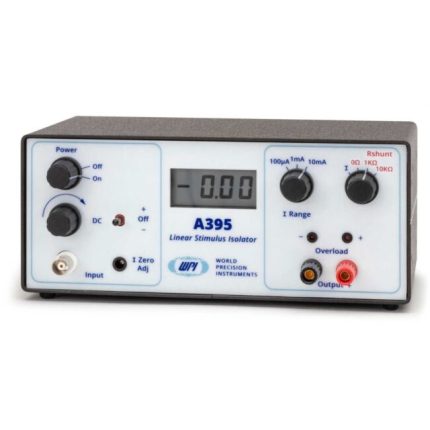
Linear Stimulus Isolator
Price range: $2,017.00 through $2,669.00
High Current Stimulus Isolator
Price range: $2,224.00 through $2,637.00
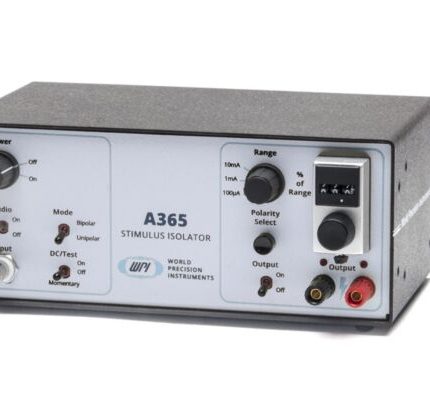
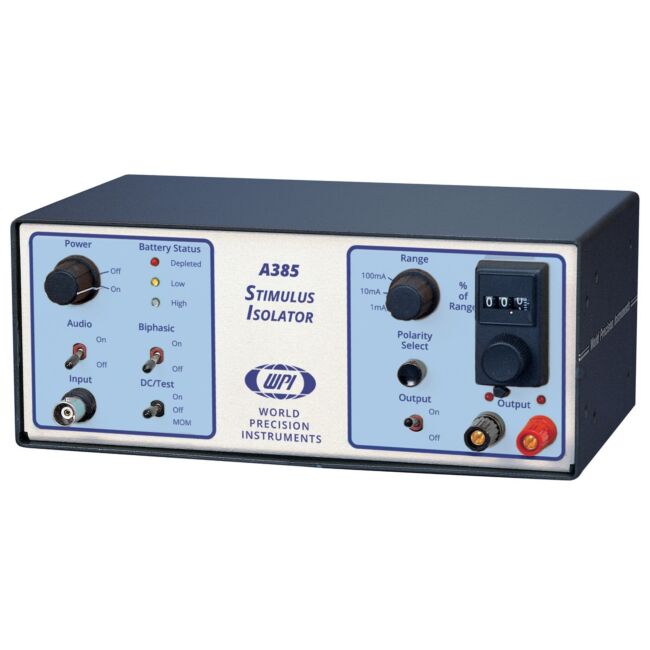
The A385 is an optically isolated current source, which can generate up to 100 mA of unipolar or biphasic constant current pulses or DC. Pulse duration is controlled manually or by an external 5V command. Output current amplitude is determined by a 3-digit 10-turn potentiometer. Maximum output voltage between the stimulating electrodes is +36V.
Additional information
Shipping & Delivery
Related products
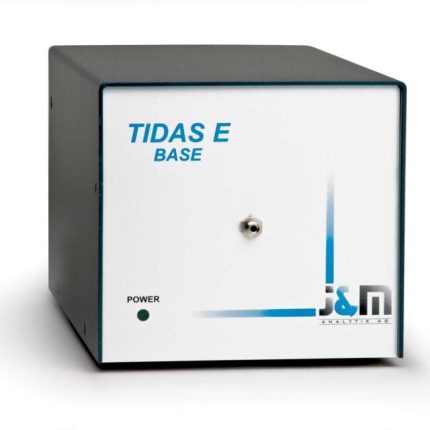
Tidas-E Base Series Photo Diode Array Spectrometer
WPI’s Tidas series is a high end fiber-optic spectrometer module designed for low noise applications. The Tidas series outperforms conventional bench-based spectrophotometers and CCD-based spectrometer modules, when it comes to high precision fiber optic sampling. It relies on a monolithic optical bench made by Zeiss, which is optimized for fiber optic applications. Most cuvette-based standard spectrometers lose more than 90% of light through expensive prism decoupling. The Tidas series is designed for fiber optic sampling cells. Using suitable light sources and sample cells, spectral detection in the wavelength range of 190 to 1100 nm can be performed at noise levels < 0.04 mAU peak to peak.
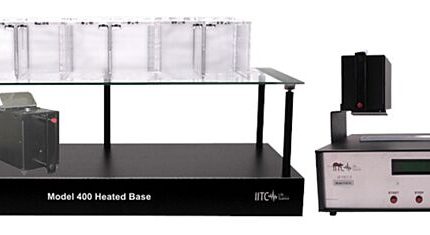
Plantar Test Analgesia Meter
his unit, which is designed for testing narcotics and strong non-narcotic drugs, offers both Plantar (Hargreaves Method) and Tail Flick testing with a single unit. Either testing system is also available individually.
II-390G : In plantar mode, the visible light/heat source is directed at the paw or other desired body part, and in tail flick mode it is directed at the subjects’ tails. Test up to 12 mice or 6 rats simultaneously.
Сatalog number:
5374
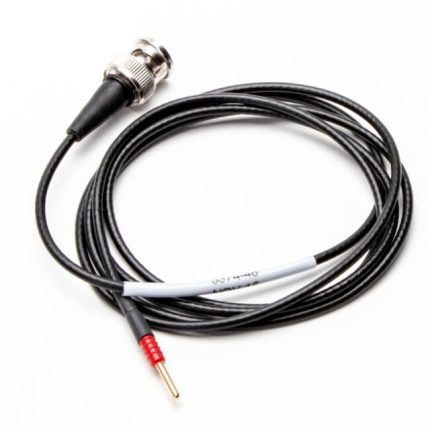
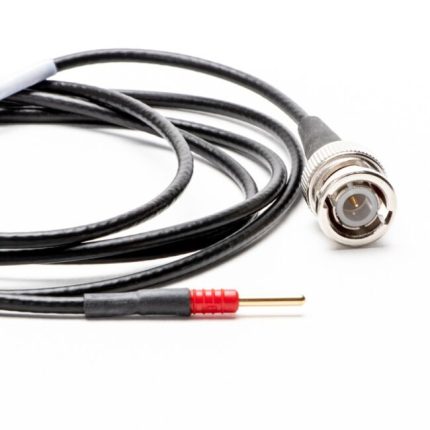
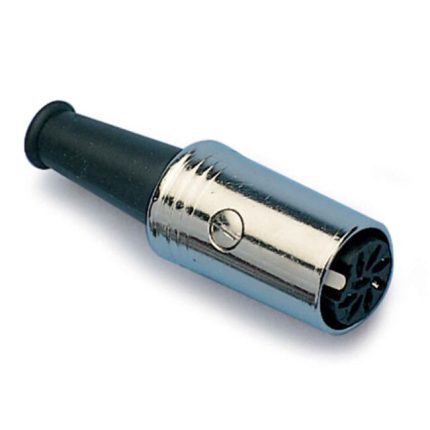
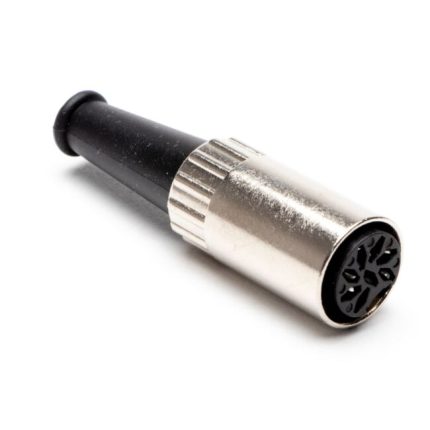
Low-noise cable for Microelectrode Holder, A: BNC (male), B: pin
PLANTAR TEST/TAIL FLICK METER FOR RAT AND MOUSE
This unit, which is designed for testing narcotics and strong non-narcotic drugs, offers both Plantar (Hargreaves Method) and Tail Flick testing with a single unit. Either testing system is also available individually. In plantar mode, the visible light/heat source is directed at the paw or other desired body part, and in tail flick mode it is directed at the subjects’ tails. Test up to 12 mice or 6 rats simultaneously. If desired, other animals like cats and rabbits may also be used. Tests are simple to setup. The focused, radiant heat/light source creates a 4 x 6 mm intense spot. Because the light is visible, you know when the test starts and ends. The equipment is silent (no whining or clicking sounds) to avoid triggering an automatic response in conditioned animals. You can set a humane cutoff timer that automatically shuts off the heat if no response is observed during the designated time frame.
Single Channel Pulse Generator
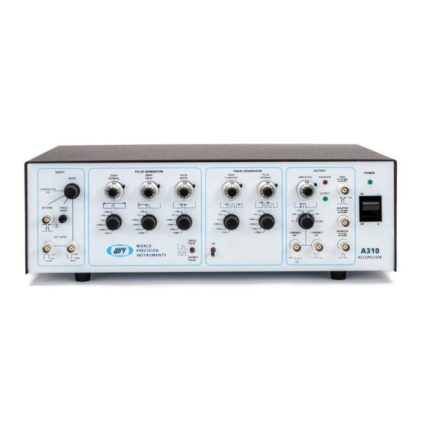
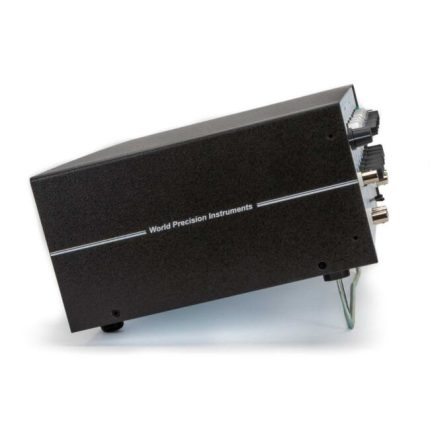
The A310 pulse generator/stimulator combines the reproducibility and accuracy of digital electronics with the fine resolution and continuous adjustment possible with analog circuitry. All timing parameters are entered with high resolution, ten-turn potentiometers and six-position range switches. Timing is accurate to within 1% of the set value.
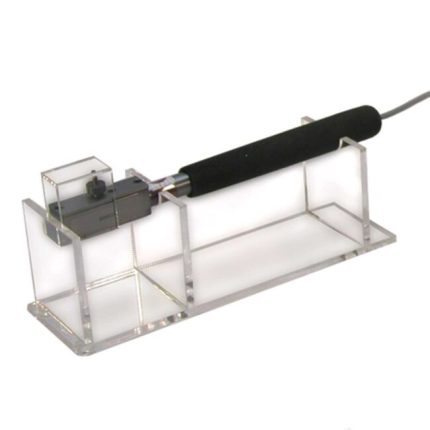
Von Frey Probe
To assess mechanical allodynia, which is a painful response to a light touch or pressure from a stimulus that is not normally painful, the Electronic von Frey Anesthesiometer was developed. The Electronic von Frey meter uses one of 15 different flexible von Frey hairs called “SuperTips™” (or rigid tips up to 800 grams). Each hair, regardless of model chosen, is exactly 0.8 mm in diameter. This uniformity of design eliminates false readings and allows for comparison of test results. The Electronic von Frey can be used with chart recorders and analog/digital converters, and it never needs calibrated. This system includes either a 90, 800 or 1,000 gram probe. Mesh stands are available in a variety of sizes for large group studies.